
PRESERVE THE DREAM
Resilient Palisades is a 501(c)(3) nonprofit working to build a safer, healthier and more resilient Pacific Palisades.
Through our Preserve the Dream campaign, we have been following plans for artificial turf at the Palisades Recreation Center since 2024. Our work focuses on public education about artificial turf, natural grass, water quality, heat, plastic pollution and the long term environmental impacts of the materials we choose for our public spaces.
Resilient Palisades supports modern, professionally managed, organically maintained natural grass for our community playing fields.

Alita discovers a ladybug in the grass at the Palisades Recreation Center.
WHERE THINGS STAND NOW
On September 17, 2026, the Los Angeles Board of Recreation and Park Commissioners approved a $4 million donation project for the Palisades Recreation Center baseball fields that includes a TenCate synthetic turf system, new lighting, dugouts, fencing and other improvements.
The vote followed more than two years of local discussion about artificial turf in Pacific Palisades and broader examination of synthetic turf by the City of Los Angeles.
During that time, over 1,000 people signed the Preserve the Dream petition supporting natural grass at the Palisades Recreation Center and asking decision makers to consider the environmental, health and long term impacts of artificial turf.
Resilient Palisades continues to follow the project, review available information about the selected materials, share independent research and advocate for living landscapes and natural playing surfaces as part of a resilient Palisades recovery.
THIS STORY STARTED BEFORE THE FIRE
Artificial turf at the Palisades Recreation Center did not first emerge during the post fire rebuild.
In fact, Pacific Palisades was already facing proposals to install artificial turf in multiple public spaces before the fire, including the Field of Dreams and the long planned Temescal Canyon Dog Park.
2018
Early plans for the Temescal Canyon Dog Park called for wood chips or mulch in the dog areas, with decomposed granite incorporated into the site. Artificial turf was not part of the original concept.
January 2024
On January 18, 2024, the Los Angeles Board of Recreation and Park Commissioners authorized the City to seek $1.5 million in Measure A funding for the Temescal Canyon Dog Park.
The proposed project now included “synthetic surfacing,” a significant change from the earlier plans for natural and permeable ground cover.
April 2024
At the April 11, 2024 Pacific Palisades Community Council meeting, Resilient Palisades representative Valeria Serna raised concerns about plans to install synthetic turf on the field of the Palisades Recreation Cent.
This is the earliest public record we have identified of Resilient Palisades raising the issue on the Field of Dreams.
May 2024
Los Angeles City Councilmembers introduced Council File 24 0602, asking the City to examine the health and environmental impacts of artificial turf, PFAS and other contaminants, disposal, field maintenance and alternatives.
September 2024
The Los Angeles City Council unanimously adopted a substitute motion directing City departments to study artificial turf, including environmental impacts, maintenance costs, synthetic turf waste, soil health and possible transitions toward other landscaping approaches.
October 2024
On October 21, community members gathered for a public meeting about the proposed Temescal Canyon Dog Park.
Resilient Palisades raised concerns about the proposed artificial turf and presented natural alternatives for a heavily used dog park, including native grasses and other permeable ground covers.
This was not a one time appearance. Resilient Palisades participated in multiple meetings and discussions around the dog park proposal, repeatedly advocating for a natural, permeable surface instead of artificial turf.
At the same time, Resilient Palisades continued raising concerns about artificial turf proposed for the Palisades Recreation Center baseball fields.
January 2025
The Palisades Fire substantially damaged the Palisades Recreation Center and changed the regulatory landscape for rebuilding. But the field survived.
On January 12, Governor Gavin Newsom issued an emergency executive order suspending certain California Environmental Quality Act, or CEQA, and Coastal Act requirements for qualifying reconstruction of properties substantially damaged or destroyed by the fires.
As plans for the Recreation Center moved forward under emergency rebuilding provisions, questions emerged about whether changes such as replacing a perfectly fine natural grass field that survived the fire with artificial turf should be treated as restoration of what was lost or as a new project requiring additional environmental review.
October 2025
At a public meeting on the Recreation Center rebuild, community members reviewed early designs and raised several requests and concerns, including requests to avoid artificial turf.
Resilient Palisades continued showing up during the rebuild process, raising concerns about converting the surviving natural grass field to artificial turf and advocating for natural grass alternatives.
November 2025
On November 18, 2025, the Los Angeles Unified School District unanimously adopted its Extreme Heat Mitigation and Disaster Preparedness resolution, prohibiting new artificial turf installations at early education centers, elementary schools and middle schools.
December 2025
By the end of 2025, community advocacy had successfully stopped the proposed installation of artificial turf at the Temescal Canyon Dog Park. Resilient Palisades later cited that outcome in comments submitted to the Los Angeles Department of Recreation and Parks.
That outcome followed sustained involvement by Resilient Palisades and community members who had repeatedly participated in the public process and pushed for alternatives to synthetic turf.
On December 9, 2025, the Palisades Recreation Center Park Advisory Board voted to recommend artificial turf for the Field of Dreams.
Before the meeting, Resilient Palisades repeatedly requested an opportunity to present information about modern natural grass alternatives and the environmental concerns associated with artificial turf.
Those requests were not granted before the Board voted.
By this point, Preserve the Dream had grown into a broader community campaign bringing together residents, environmental organizations, scientists and playing field experts in support of natural grass. The community petition has since surpassed 1,000 signatures.
July 2026
At the July 8, 2026 California Coastal Commission meeting, Commission staff specifically addressed the proposed artificial turf at the Palisades Recreation Center. Staff said they had already been in discussions with the City of Los Angeles and had informed the City that a Coastal Development Permit would be required for the portion of the project within the coastal zone.
Commission staff further stated that they “would not be recommending approval of an artificial turf system.”
This meant that even as the City continued moving the artificial turf project forward, California Coastal Commission staff had already told the City that the affected portion of the project required coastal review and that staff would not recommend approval of artificial turf.
September 2026
On September 17, 2026, the Los Angeles Board of Recreation and Park Commissioners approved the field improvement project, including synthetic turf. (Pali Post)
The decision came less than a year after community advocacy successfully stopped artificial turf from being installed at another Palisades public space, the Temescal Canyon Dog Park.
Our work continues as the project moves forward.
WHY ARTIFICIAL TURF DESERVES CAREFUL REVIEW
Artificial turf is an engineered surface made primarily from plastic materials. A complete field system can include plastic turf fibers, backing, infill, pads and a constructed base.
Research and government reviews have raised questions about several parts of that system.
PFAS AND OTHER CHEMICALS
PFAS, a large group of persistent synthetic chemicals, are often called “forever chemicals” because they do not easily break down in the environment.
Public Employees for Environmental Responsibility, or PEER, has found PFAS in artificial turf fibers and backing and has raised concerns about those chemicals moving into surrounding soil and water. They submitted extensive comments to Los Angeles Council File 24 0602 documenting its testing and research into PFAS in artificial turf.
California’s Department of Toxic Substances Control has also studied chemicals in synthetic turf and their potential environmental impacts.
That is why “PFAS free” claims deserve scrutiny.
Independent testing commissioned by Zero Waste Ithaca found PFAS in a TenCate artificial turf product installed at Cornell University, despite claims that the product was PFAS free.
Multiple PFAS compounds were detected in samples from the turf system.
The Palisades Recreation Center project specifies a "PFAS free" TenCate synthetic turf system for the Field of Dreams.
PLASTIC AND MICROPLASTIC POLLUTION
Artificial turf is plastic.
Like other plastic products exposed to sunlight, weather and physical abrasion, synthetic turf materials can degrade over time.
Researchers and environmental organizations have raised concerns about plastic fibers and particles leaving playing surfaces and entering surrounding soil, stormwater systems and waterways.
For a coastal community, what leaves our playing fields matters.
EXTREME SURFACE HEAT
Artificial turf can become dramatically hotter than natural grass in direct sunlight.
A 2024 systematic review of 23 studies found that surface temperatures on synthetic grass were consistently higher than on natural grass. Across the research reviewed, the difference ranged from about 17°F to 61°F.
One study recorded a synthetic turf surface temperature of approximately 188°F.

On September 20, 2026, during an NFL game between the Philadelphia Eagles and Tennessee Titans in Nashville, the artificial turf at Nissan Stadium reportedly reached 157°F while the air temperature was about 95°F. Players had water sprayed onto their cleats to cool them. Eagles center Cam Jurgens went through multiple pairs of cleats after they began melting, and Eagles coach Nick Sirianni needed IV fluids after the game.
Natural grass stays cooler because living plants and soil release water through evapotranspiration, helping cool the surface and surrounding air. Artificial turf does not provide that same natural cooling process.
For communities facing increasingly hot days, surface temperature matters when deciding what materials belong in public spaces used by children, athletes and families.
PLAYER SAFETY AND INJURIES
Playing surface can affect traction and the forces placed on an athlete’s knees and ankles.
Research has found higher rates of some injuries on artificial turf, including ACL and other knee injuries in certain groups of athletes. A systematic review found female soccer players had a significantly higher risk of ACL injury on artificial turf than on natural grass.
WATER AND RUNOFF

Palisades Recreation and Park Playing Field on December 27, 2025
Natural soil can absorb rainfall.
When rain moves into healthy soil, that water can be stored, filtered and used by plants rather than immediately becoming runoff.
Artificial playing fields require substantial engineered base systems. Researchers and environmental organizations have raised questions about how these systems change infiltration and how contaminants and plastic particles may move with runoff.
This is particularly significant in Pacific Palisades because our community sits directly above coastal watersheds that ultimately connect with Santa Monica Bay.
Protecting soil and slowing stormwater are already central parts of Resilient Palisades' landscape recovery work.
END OF LIFE AND WASTE
Artificial turf does not last forever.
The artificial turf system approved for the Palisades Recreation Center includes approximately 142,500 pounds of plastic turf material.
At the end of the field’s usable life, that material, along with backing, infill and other components, will eventually need to be removed, replaced, recycled where possible or disposed of.
Artificial turf recycling remains difficult because a field is made from multiple materials, including different plastics, backing systems, adhesives and infill that may need to be separated before they can be processed.
PEER has raised concerns about artificial turf disposal, including PFAS and other chemicals that may remain in discarded turf materials. The City of Los Angeles is also examining synthetic grass waste, recycling, disposal costs and environmental impacts through Council File 24 0602.
For this project alone, the community is not simply choosing a playing surface. It is choosing what will eventually happen to more than 71 tons of plastic turf material.
That is why disposal and replacement should be considered as part of the full life cycle of the field, not just the initial installation.
Safe Healthy Playing Fields: ENVIRONMENTAL HAZARDS OF ARTIFICIAL TURF
A FOSSIL FUEL PRODUCT
As fuel demand declines, the fossil fuel industry is increasingly turning to plastics and petrochemicals for future growth. The International Energy Agency projects petrochemicals to become the dominant source of global oil demand growth.
Artificial turf is a plastic product made largely from petrochemical materials. Modern systems commonly use polyethylene grass fibers along with polypropylene, polyurethane and other synthetic materials.
That means the artificial turf conversation is also part of a larger conversation about fossil fuel based plastics, their production, their use and what happens to them at the end of their life.
The synthetic turf industry is also actively represented in government and public policy debates. The Synthetic Turf Council describes advocacy as a central part of its mission and says it represents the industry before federal, state and local governments, monitors legislation, engages elected officials and participates in legislative hearings.
The Council also operates a Government Affairs program and is listed in California’s official lobbying records.
For communities evaluating artificial turf, it is important to understand not only the product itself, but also the industry working to promote its continued use.
LEARN ABOUT SYNTHETIC TURF INDUSTRY ADVOCACY
WILDFIRE AND RESILIENCE
Pacific Palisades is rebuilding after a catastrophic wildfire.
Our community is already confronting questions about contamination, damaged soil, rebuilding materials and how to create a healthier and more resilient landscape after the fire.
At this moment, Resilient Palisades believes it makes little sense to replace living soil and grass with acres of plastic without fully considering what those materials mean over their entire life cycle.
That includes extreme surface heat, combustion and fire behavior, plastic and microplastic pollution, chemical content, runoff, eventual disposal and long term environmental performance.
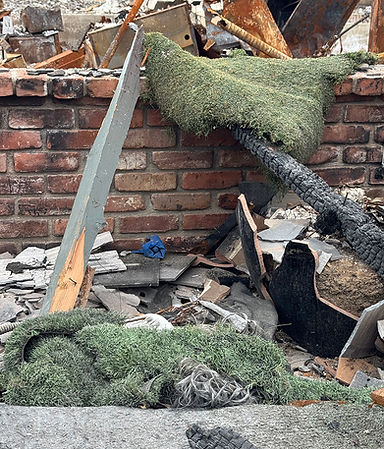
Rebuilding is an opportunity to make our public spaces healthier and more resilient than they were before.
The Santa Clara County Medical Association Environmental Health Committee has also raised concerns about artificial turf related to heat, chemical exposure, plastic pollution, disposal and broader environmental health.
A PALISADES PERSPECTIVE
Dr. Alisa Bromberg
Palisades Pediatrics
We are a community with deep ties to the land. We stand on the shoulders of the ancestral Indigenous peoples who settled here and relied on the area’s natural resources, and whose legacy remains embedded in the topography, nature and connection with the land of our great Pacific Palisades community. We have traditionally prided ourselves on this history.
What happened on January 7, 2025 was catastrophic, but we are a resilient community and we are rebuilding. We need to honor the spirit of the land and the spirit of those who came before us as we rebuild, and using artificial, synthetic turf, which may or may not carry long term health issues and safety concerns, flies in the face of who we are and what we are known for.
Our parks and recreation centers are what stand between where “The Mountains Meet The Sea,” where families and friends gather and picnic, where sports are played and trophies are given, where summer movies are watched together on blankets and folding chairs, and where the smell of fresh grass and earth wafts through the neighborhoods at night.
We should be rebuilding responsibly, safely, greenly and naturally, and using artificial grass to displace our natural heritage should not be part of that process.
WHAT ABOUT NATURAL GRASS?
The choice is not between artificial turf and a muddy, failing grass field.
Modern natural sports fields can be designed specifically for intensive athletic use.
A high performance natural field can combine engineered drainage, healthy soil, appropriate grass varieties, efficient irrigation, aeration, overseeding and professional maintenance. Organic and regenerative management practices can reduce reliance on synthetic pesticides and fertilizers while strengthening the soil underneath the field.
Safe Healthy Playing Fields: Natural Grass Field Maintenance
Natural Grass and Organic Management Resources
Potential grasses for Southern California playing fields include:
Zoysia
Durable, relatively drought tolerant and capable of repairing itself through spreading growth.
Seashore Paspalum
Highly salt tolerant and well suited to coastal conditions.
Kikuyu
Fast growing, durable under heavy traffic and able to recover quickly.
Bermuda Hybrids
Widely used for athletic fields because of their durability, recovery and sports performance.
The appropriate grass variety and field design should ultimately be determined by qualified turfgrass and sports field professionals based on local conditions, usage and maintenance capacity.
Our Smarter Natural Grass program brought together experts in sports fields, soil, water, public health and landscape management to show what a modern natural field can look like in Southern California.
EXPLORE SMARTER NATURAL GRASS
Topics included:
-
Natural field construction and drainage
-
Soil health and water infiltration
-
Water efficient irrigation
-
Grass varieties suited to Southern California
-
Field maintenance and recovery
-
Athlete experience and field performance
-
Long term field costs
-
Stormwater management
SMARTER NATURAL GRASS
Our community is proving that natural, organically managed fields are safer, cooler, and more sustainable. Let’s keep working together to Preserve the Dream and Keep Our Park Naturally Green.
ORGANIC MANAGEMENT
Natural grass is not automatically sustainable simply because it is alive.
How a field is built and maintained is a large part of this.
Resilient Palisades supports professionally managed natural fields that prioritize healthy soil, efficient irrigation, appropriate grass varieties and organic or regenerative maintenance practices.
Healthy soil supports stronger roots, improves water infiltration and helps a field recover from intensive use. Good field management also reduces the need to continually replace the playing surface itself.
The goal is not to recreate outdated field management. It is to build a modern natural field designed for play, water efficiency, soil health and long term resilience.
NATURAL FIELDS ARE LIVING INFRASTRUCTURE
A natural playing field is more than a playing surface.
Living grass and healthy soil absorb rainfall, slow runoff, filter water, support soil organisms and cool their surroundings through evapotranspiration.
Unlike an impermeable plastic product sitting over an engineered base, living soil continues functioning as part of the surrounding ecosystem.
Using the Living Infrastructure Field Kit developed by Accelerate Resilience LA, Resilient Palisades estimated that maintaining a natural field at the Palisades Recreation Center could capture and filter more than 1.8 million gallons of stormwater each year.
That is rainfall that can move into living soil rather than immediately becoming runoff carrying pollutants toward our coastal watershed.

For a community directly connected to Temescal Canyon and Santa Monica Bay, keeping more rainfall in living soil helps protect the watershed downstream. Playing fields should be viewed as part of our water system, our urban cooling system and our larger landscape, not simply as recreational surfaces.
EPA: About Green Infrastructure
A LONG TERM INVESTMENT
Artificial turf comes with a replacement cycle. Natural soil does not have to be ripped out and discarded every time a playing surface reaches the end of a product warranty.
A professionally managed natural field can continue functioning for decades while the grass, soil and field management practices are repaired and improved over time.
Over the long term, the costs of well maintained natural grass and artificial turf are comparable when maintenance, water, repairs, replacement and disposal are all included.
Natural grass also keeps more of that spending in the local economy by supporting ongoing jobs in field management, irrigation, soil care, landscaping and maintenance rather than concentrating costs in periodic purchases of manufactured replacement materials.
The real financial comparison should look beyond installation costs and account for the full life of the field.
Resilient Palisades believes those long term costs, environmental impacts and local economic benefits should be publicly compared before decisions are made about community playing fields.
WHAT RESILIENT PALISADES HAS DONE
Since first raising concerns about artificial turf in 2024, Resilient Palisades volunteers have:
-
Raised the issue through public community meetings
-
Hosted educational programs about artificial turf and natural playing fields
-
Reviewed scientific and government research
-
Shared research with residents and decision makers
-
Organized the Preserve the Dream campaign
-
Built a community petition that has surpassed 1,000 signatures
-
Launched a community letter writing campaign that has generated more than 8,600 letters to decision makers
-
Brought together public health, environmental, soil and athletic field experts
-
Participated in public meetings and hearings
-
Worked with environmental and community organizations
-
Continued researching artificial turf products and independent testing
-
Promoted modern, organically managed natural fields as an alternative
This work is part of our larger mission to build a healthier, safer and more resilient Pacific Palisades.
HEAR FROM THE EXPERTS
Children's Health
Children and athletes are among the people who spend the most time in direct contact with playing surfaces.
Artificial turf can expose players to extreme surface heat, plastic particles and a complex mixture of chemicals used in turf fibers, backing and infill.
Sarah Evans, PhD, MPH, of the Icahn School of Medicine at Mount Sinai has presented research on artificial turf, heat, PFAS, microplastics and other potential exposures affecting children. Mount Sinai’s Children’s Environmental Health Center recommends natural grass as the preferred playing surface for children.
Public playing fields should not introduce avoidable sources of extreme heat, plastic pollution or chemical exposure where children play.
RESEARCH AND PUBLIC RECORD
We encourage residents to read the underlying research and public documents directly.
City and Government Sources
Los Angeles City Council File 24 0602
Synthetic Grass, Artificial Turf, PFAS, Health and Environmental Risks and Drought Friendly Landscaping
View the official Council File
California Department of Toxic Substances Control
Research on chemicals and synthetic turf, including California’s evaluation of PFAS in artificial turf.
View DTSC’s artificial turf research
Los Angeles Department of Recreation and Parks
Palisades Recreation Center project documents, Commission reports and public meeting materials.
View Recreation and Parks information
Independent Research and Expert Resources
Public Employees for Environmental Responsibility
Research and comments on artificial turf, including PFAS, microplastics, heat, runoff and disposal.
Explore PEER’s artificial turf research
Safe Healthy Playing Fields
Research and educational resources on natural grass and synthetic playing surfaces, including field management, health and environmental considerations.
Explore Safe Healthy Playing Fields
National Center for Health Research
Research and educational resources on artificial turf, including chemical exposure, extreme heat, injuries and environmental impacts.
Explore the artificial turf research
Santa Clara County Medical Association
Medical policy recommendations, webinars and research addressing artificial turf, environmental health, heat, chemical exposure and natural grass alternatives.
Explore SCCMA’s environmental health resources
Resilient Palisades Resources
Smarter Natural Grass Webinar
Watch the webinar and explore expert presentations on natural grass, soil health, water, public health and field management.
Artificial Turf FAQ
Evidence based information from Resilient Palisades on artificial turf, natural grass and the environmental and health questions surrounding playing field materials.
Artificial Turf in Pacific Palisades
Read the September 2025 Resilient Palisades article explaining the origins of the local artificial turf debate and the case for natural alternatives.
Living Infrastructure Field Kit
Explore the tool Resilient Palisades has used to evaluate the value of living landscapes and stormwater capture at the Palisades Recreation Center.
Explore the Living Infrastructure Field Kit
PRESERVE THE DREAM
The Field of Dreams is more than a playing surface.
It is where children grow up, teams practice, families gather and generations of Palisadians have spent time outdoors.
The decisions being made now will shape this public space for decades.
Resilient Palisades will continue providing residents with research, public records and educational resources about artificial turf, natural grass and resilient landscapes as the Recreation Center project moves forward.
We will also continue advocating for modern, organically managed natural grass and for rebuilding decisions that protect our soil, water, children and environment.
WAYS YOU CAN HELP
Sign the petition. More than 1,000 people have already joined the call to preserve natural grass at the Palisades Recreation Center.
Share the research. Talk with neighbors, parents, athletes and coaches about what is being proposed and why the choice of playing surface matters.
Stay involved. Follow Preserve the Dream as the project moves through the next stages of review and implementation.
Support our work. Donations help Resilient Palisades continue community education, environmental advocacy and landscape recovery work throughout Pacific Palisades.